
Valentine Geze and Mitul Iyengar; Hidden Hues: A Study of Algae Pigments, SCI 6372: Circuits, Circles, and Loops: Towards a Regenerative Architecture; Jonathan Grinham, Harvard Graduate School of Design, 2024.
About.
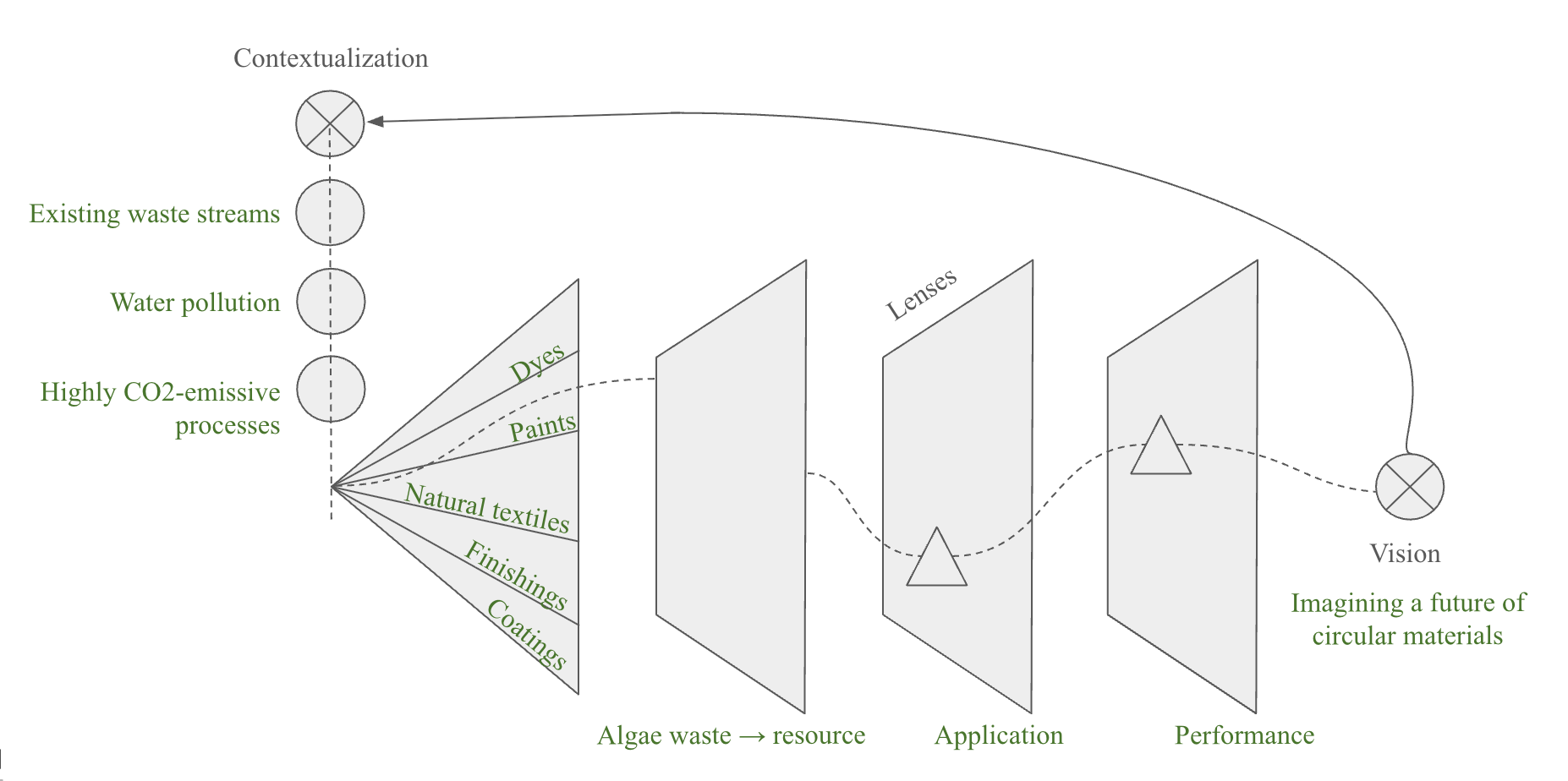
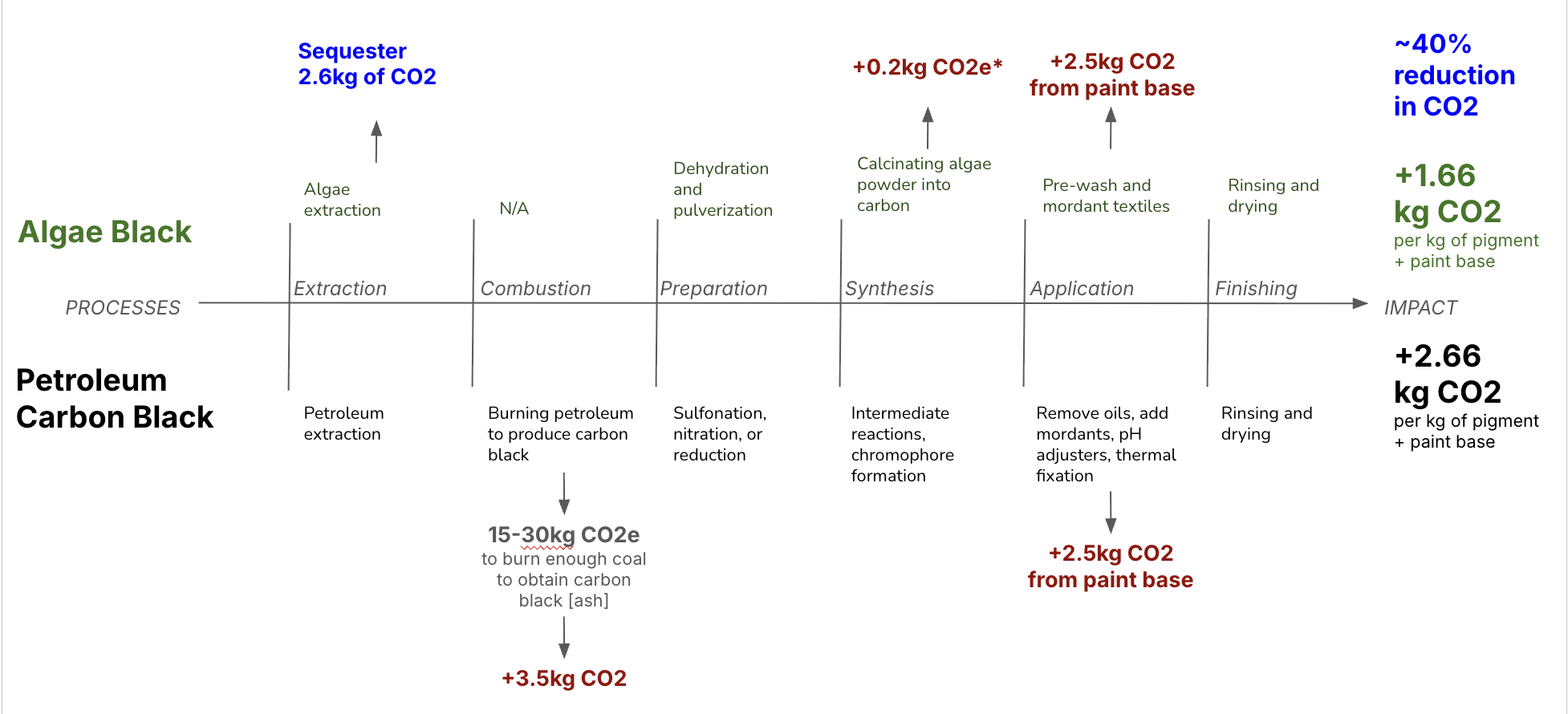
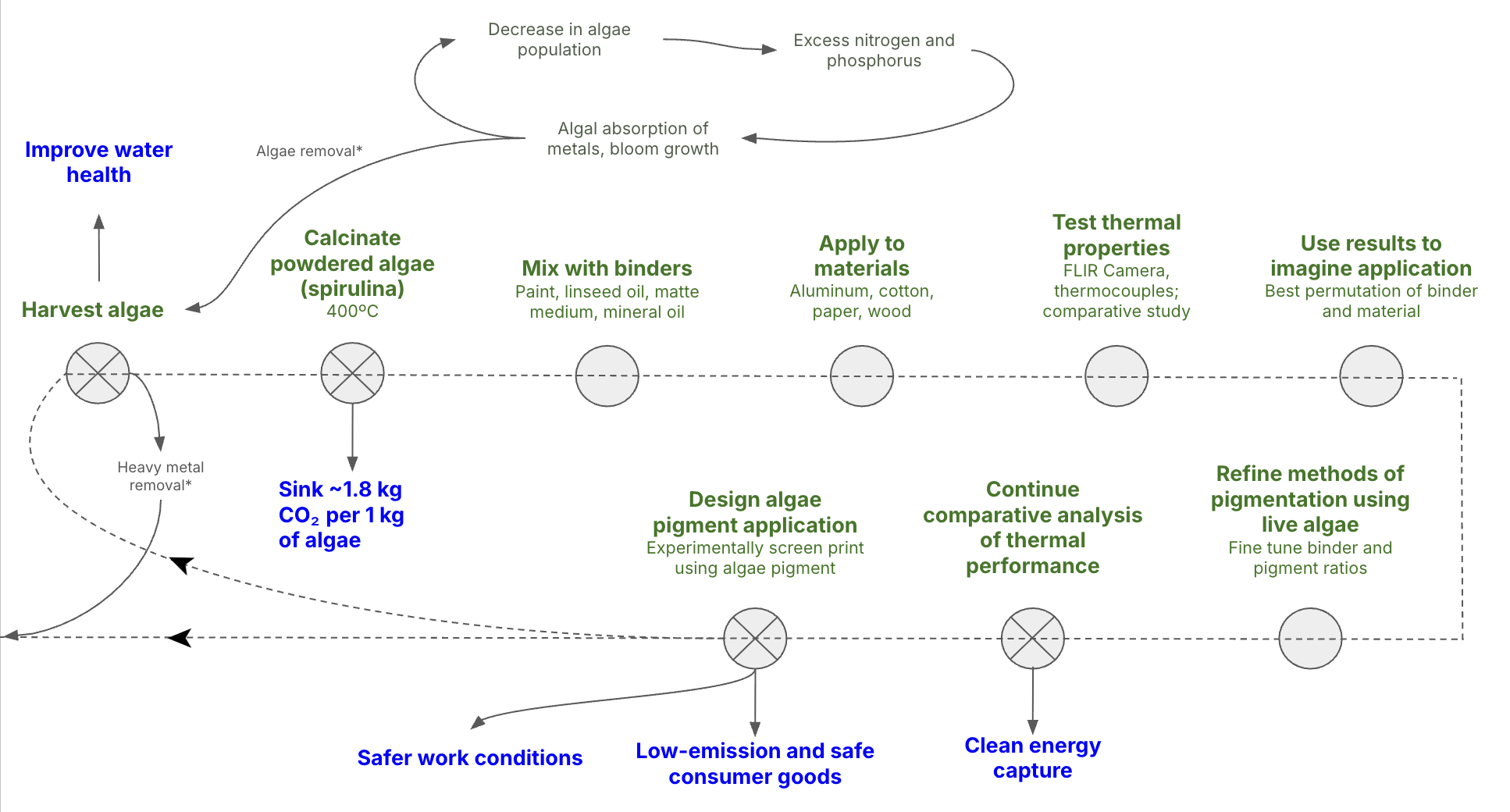
The textile industry leans heavily on petroleum-derived materials across all portions of its operations, ffrom raw material, to dyeing, to finishing processes. In this work, under the guidance of Jonathan Grinham and with the support of Leonard Palmer, I worked alongside my peer Mitul Iyengar (MDE ‘26) to seek alternative pigments to petroleum-based “carbon black,” of which 14.5 million tons are created annually, emitting approximately 40 million tons of carbon dioxide. Our research on regenerative pigment sources led us to the development of “algae black,” a black carbon pigment produced by calcinating algae.
Regeneration - Waste to Resource:
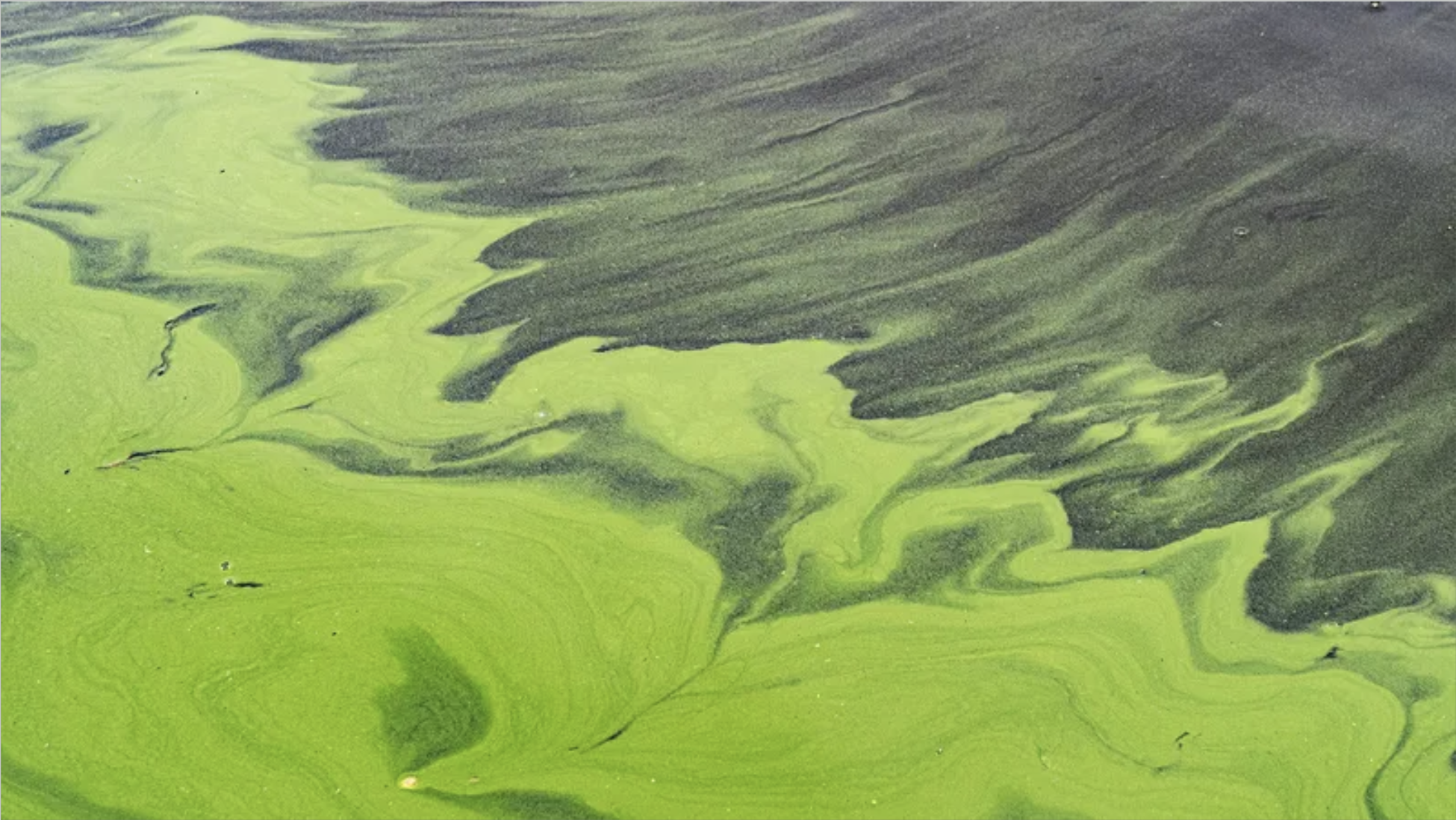
There are around 21.13 billion metric tons of algal blooms globally as of 2024. These algal blooms have benefits such as carbon capture and heavy metal absorption; however, they can also have harmful effects such as toxicity to the ecosystem, economic impacts on fishing, and water quality decline. By developing uses for these algal stocks, we would be simultaneously managing water body health and replacing a carbon-intensive process with a carbon-negative one.
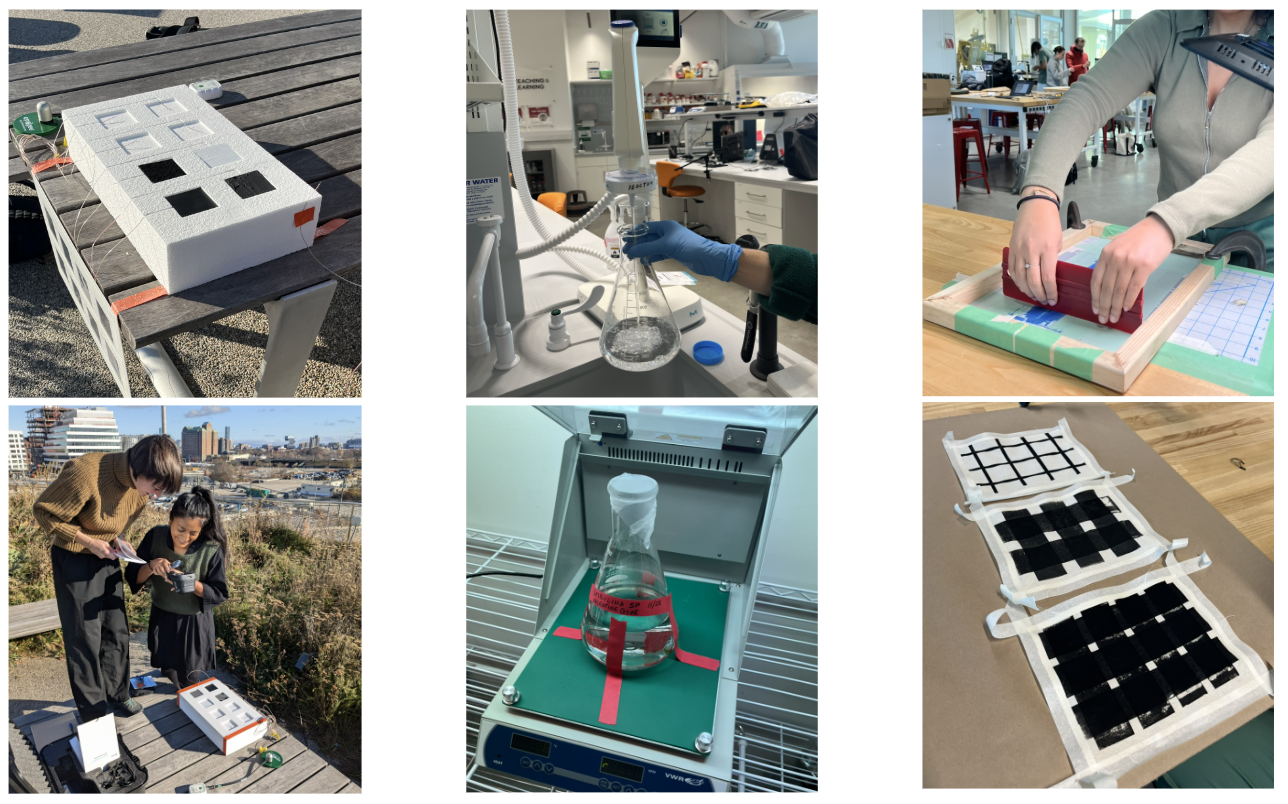
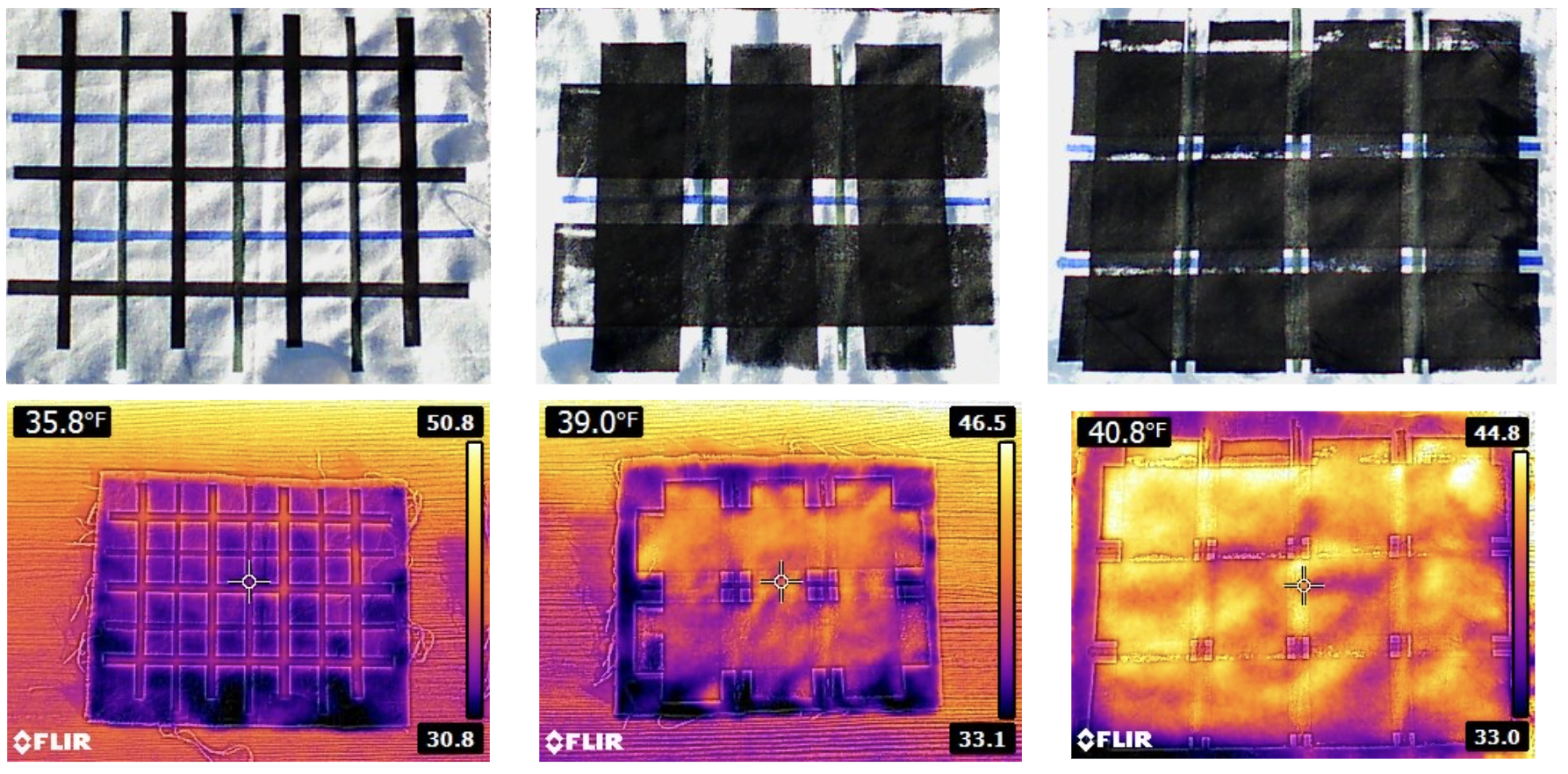
Process and Thermal Testing.
In this research, we explored different calcination temperatures, pigment binders, and material applications using the black carbon yielded from algae. Further, we tested the thermal performance of the algae black pigments against traditional petroleum-based pigments to research future applications in architecutre such as building insulation.